

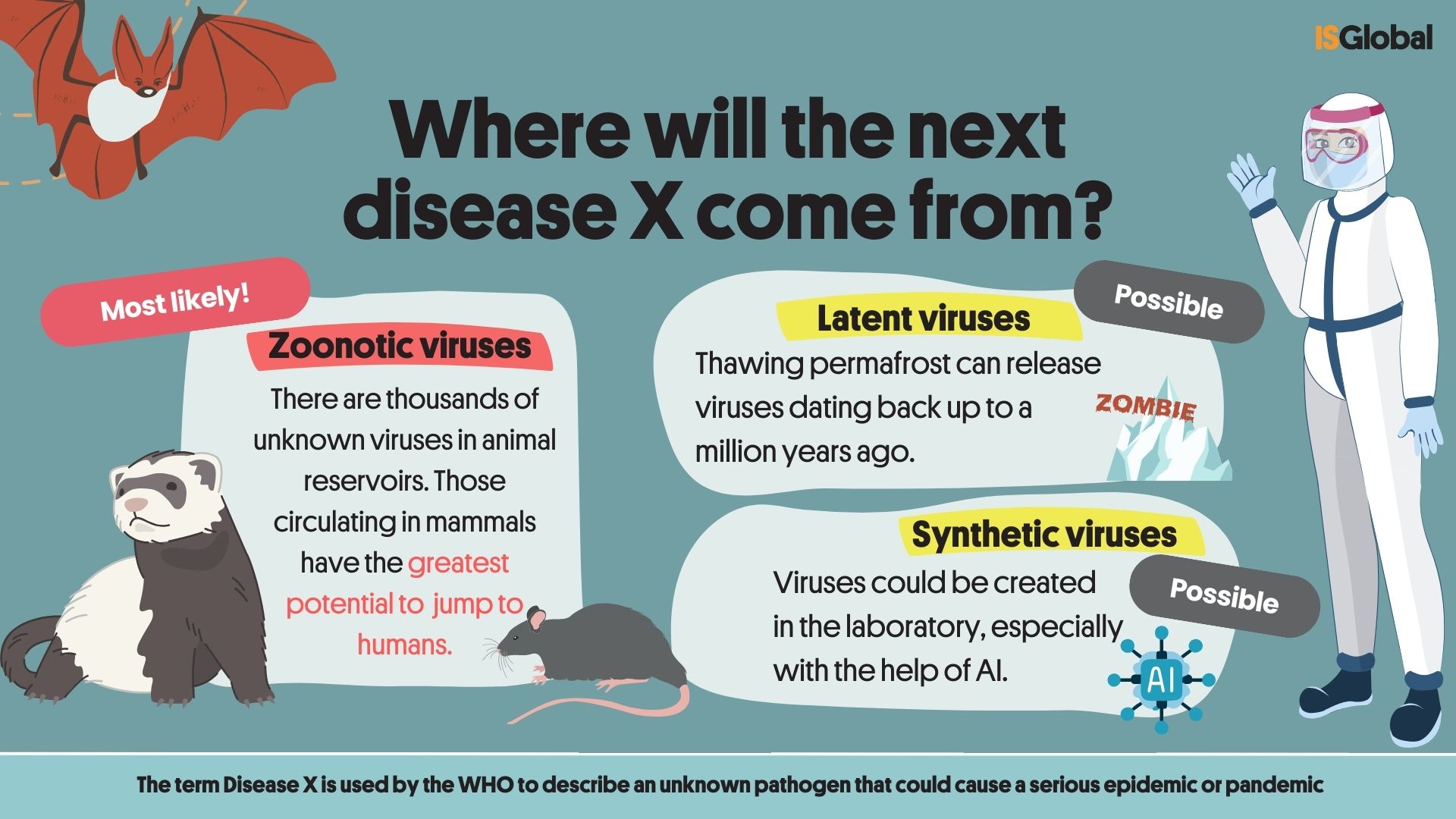
Disease X Preparedness means preparing for an outbreak caused by a pathogen not yet known to cause human disease. Instead of predicting one virus or bacterium, scientists build flexible systems that can detect unfamiliar threats and begin a response quickly.
That work combines genomic surveillance, adaptable vaccine platforms, diagnostics, research, manufacturing capacity, and One Health monitoring across people, animals, and environments. The aim is to reduce delays between warning signals and the delivery of tests, treatments, vaccines, and public-health measures.
What Does Disease X Actually Mean?
Disease X is not the name of a known infection. The World Health Organization uses the term to acknowledge that a serious international epidemic could be caused by a pathogen that is currently unknown to cause human disease.
WHO formally included Disease X in its epidemic research priorities to encourage scientists, governments, laboratories, manufacturers, and health systems to prepare for threats that cannot yet be named. The concept is therefore a planning scenario, not a prediction that one specific disease is about to appear.
The organism behind a future Disease X could have biological characteristics that researchers have seen before, or it could behave in unexpected ways. That uncertainty explains why modern pandemic preparedness increasingly focuses on adaptable scientific capabilities rather than preparing only for a short list of known diseases.
Why Scientists Are Preparing for Pathogen Families, Not Just Individual Viruses
Preparing separately for every possible pathogen would be impractical. Scientists therefore look for common biological features within pathogen families.
WHO’s newer pathogen-prioritization framework evaluates viral and bacterial families and uses prototype pathogens as scientific starting points. Studying representative members of a family can help researchers establish laboratory methods, animal models, assays, vaccine technologies, reagents, and knowledge that may later be adapted when a related but unfamiliar pathogen emerges.
This approach creates a scientific head start.
For example, researchers who already understand how viruses within a particular family enter cells, trigger immune responses, reproduce, and transmit may be able to investigate an unfamiliar member of that family faster than if they were beginning with no relevant research infrastructure.
The strategy continues to evolve. In April 2026, WHO and partners launched research and development roadmaps covering 10 viral families and a group of bacteria to strengthen coordinated preparedness for future epidemic and pandemic threats.
Early Detection Is the First Line of Disease X Preparedness
A fast vaccine response matters only if authorities recognize a threat early enough to act. That makes surveillance one of the most important components of pandemic preparedness.
No single surveillance method is sufficient. Effective early warning depends on connecting information from hospitals, laboratories, genomic sequencing, animal-health systems, environmental monitoring, epidemiologists, and international public-health networks.
| Preparedness layer | What it can provide | Why it matters for Disease X |
|---|---|---|
| Clinical surveillance | Recognition of unusual illnesses or clusters | May reveal the first sign that something abnormal is occurring |
| Laboratory testing | Confirmation and characterization of pathogens | Helps distinguish a new threat from familiar infections |
| Genomic surveillance | Genetic information about a pathogen | Supports identification, comparison, tracking, and countermeasure research |
| Animal surveillance | Evidence of infections circulating in animals | May reveal threats before or during spillover into humans |
| Wastewater surveillance | Population-level signals from environmental samples | Can complement clinical surveillance where appropriate |
| Epidemiological investigation | Information about transmission patterns and affected groups | Helps authorities understand how an outbreak is spreading |
| International data sharing | Connections between signals from different regions | Helps identify threats that cross national borders |
WHO describes genomic surveillance as part of a broader end-to-end system involving sampling, diagnostics, data analysis, sharing, and public-health decision-making rather than as an isolated laboratory activity.
How Wastewater Surveillance Can Help
Wastewater and environmental surveillance can detect biological signals in sewage or other waters affected by human wastewater. It has long been used in poliovirus surveillance and was expanded during the COVID-19 response.
It does not replace clinical testing or tell authorities exactly which individual is infected. Instead, WHO describes it as a complementary surveillance tool that can fill certain information gaps when the method is technically feasible and the results can support public-health action.
One Health Could Help Identify Threats Before They Become Pandemics
Pandemic preparedness cannot focus exclusively on hospitals.
Human health is connected with animal health and environmental conditions. The One Health approach brings these fields together so that veterinarians, epidemiologists, ecologists, laboratories, public-health agencies, and other specialists can identify threats across the human-animal-environment interface.
WHO notes that more than 60% of reported emerging infectious diseases globally originate in animals. Factors including animal trade, agriculture, urbanization, habitat disruption, and climate-related changes can affect opportunities for pathogens to emerge or spread.
For Disease X preparedness, this means monitoring unusual infections in animals can be relevant even when human cases have not yet become widespread.
The objective is not simply to detect an epidemic sooner. Where possible, One Health strategies also attempt to understand and reduce conditions that contribute to zoonotic spillover in the first place.
Adaptable Vaccine Platforms Could Dramatically Shorten Development
Traditional vaccine development often begins with extensive work specific to one pathogen. Platform technologies attempt to retain a tested technological backbone while changing the pathogen-specific component.
Examples under development or already used for different vaccines include nucleic-acid platforms, viral-vector systems, and recombinant-protein technologies.
The advantage for Disease X preparedness is adaptability. Researchers cannot manufacture a specific vaccine against a pathogen that has not yet been identified, but they can prepare technology, manufacturing processes, analytical methods, clinical infrastructure, and regulatory experience before an emergency occurs.
What Is the 100 Days Mission?
The Coalition for Epidemic Preparedness Innovations, or CEPI, is pursuing the 100 Days Mission: an ambition to make safe, effective, and accessible vaccines ready for initial authorization and manufacturing at scale within 100 days of identifying a new pandemic threat.
That target should not be interpreted as a promise that every future pathogen will have a vaccine exactly 100 days after discovery.
A vaccine would still have to satisfy scientific, safety, efficacy, manufacturing, and regulatory requirements. The purpose of the target is to redesign preparedness so that work normally started during an emergency has already been completed wherever possible.
Faster Diagnostics Are Just as Important as Vaccines
During the beginning of an outbreak, clinicians need to know what they are dealing with.
Once scientists obtain reliable information about a new pathogen, researchers can begin developing pathogen-specific laboratory tests. Prepared diagnostic platforms, validated laboratory networks, reference materials, and established quality systems can reduce the amount of infrastructure that must be created from scratch.
WHO’s R&D Blueprint supports advance preparation through research roadmaps, target product profiles, and research protocols intended to accelerate diagnostics, therapeutics, and vaccines during health emergencies.
Rapid testing serves several purposes. It helps confirm cases, investigate transmission, support patient management, improve surveillance, and provide the data researchers need to understand the outbreak.
Speed, however, cannot substitute for accuracy. Tests must still be appropriately validated for their intended use.
Preparing Treatments Before the Next Pandemic
Vaccines are only one part of medical countermeasure preparedness.
Researchers can also investigate broad-spectrum antiviral approaches, antibody technologies, drug libraries, and therapeutic platforms that could provide useful starting points against newly identified pathogens.
Equally important is having research infrastructure ready.
Clinical-trial sites, ethics procedures, statistical expertise, data systems, research networks, and standardized protocols can reduce administrative and scientific delays once an outbreak begins. WHO’s R&D Blueprint is designed specifically to accelerate the development of medical countermeasures during epidemic and pandemic emergencies.
A promising drug in a laboratory is not automatically an effective treatment in patients. Controlled clinical research remains necessary to determine whether an intervention is sufficiently safe and effective.
Manufacturing Capacity Must Be Ready Before a Crisis
Developing a successful vaccine or treatment does not automatically make it available to millions of people.
Manufacturers require production facilities, trained workers, validated processes, raw materials, quality-control systems, packaging capacity, transportation networks, and regulatory authorization.
If much of that planning begins only after a pandemic has started, valuable time can be lost.
Pandemic-preparedness organizations are therefore investing in manufacturing networks and adaptable technologies across different regions. CEPI’s current strategy emphasizes connecting research, manufacturing, and regulatory readiness so that these systems can respond together when a new threat emerges.
Geographically distributed manufacturing can also improve resilience. A global response is less vulnerable when essential products are not dependent on a very small number of production locations.
What an Effective Disease X Response Could Look Like
The exact response would depend on the pathogen, so no universal timeline can be guaranteed. However, a well-prepared scientific system would aim to move through several overlapping stages without waiting for one stage to finish before beginning another.
| Stage | Preparedness objective |
|---|---|
| Unusual signal appears | Detect abnormal illness or transmission quickly |
| Samples are investigated | Identify and characterize the responsible pathogen |
| Genome and epidemiology are analyzed | Understand relationships, spread, and biological characteristics |
| Diagnostic development begins | Create and validate tests suitable for the emerging threat |
| Existing research platforms are activated | Adapt vaccine and therapeutic technologies where scientifically appropriate |
| Clinical research begins | Evaluate safety and effectiveness using prepared research networks |
| Manufacturing scales | Produce successful countermeasures under appropriate quality standards |
| Public-health response expands | Combine medical countermeasures with surveillance, clinical care, communication, and outbreak control |
These activities would ideally occur in parallel. The purpose of preparedness is to remove avoidable delays before an emergency begins.
How Artificial Intelligence May Support Pandemic Research
Artificial intelligence is becoming another component of preparedness research.
CEPI is developing a proposed Pandemic Preparedness Engine intended to integrate information such as genomic sequences, epidemiological data, vaccine-design resources, preclinical and clinical information, manufacturing knowledge, and regulatory data. The goal is to help researchers analyze complex information and accelerate parts of vaccine research and development.
AI does not eliminate the need for laboratory experiments, clinical trials, regulatory review, or expert judgment.
It also introduces important biosecurity and data-governance questions. CEPI has consequently emphasized a biosecurity-by-design approach for its pandemic AI work, recognizing that advanced biological technologies need safeguards against accidental or deliberate misuse.
The practical opportunity is therefore not “AI replacing scientists.” It is AI helping qualified researchers process evidence, compare possibilities, and make parts of an extremely complex development process more efficient.
Why Data Sharing Matters During an Emerging Outbreak
Researchers cannot respond rapidly if important pathogen information remains isolated.
Genomic sequences, laboratory findings, epidemiological observations, clinical information, and biological samples can help scientists in different countries develop diagnostics and medical countermeasures.
At the same time, international pathogen sharing raises legitimate questions about access, sovereignty, scientific credit, commercial use, and whether countries contributing samples or data will receive fair access to resulting vaccines, diagnostics, and treatments.
These issues are part of the WHO Pandemic Agreement adopted by the World Health Assembly in May 2025.
As of September 12, 2026, Member States were still negotiating its Pathogen Access and Benefit-Sharing, or PABS, annex. The next negotiating session was scheduled for September 14–18, 2026. The proposed system is intended to connect rapid pathogen and sequence sharing with fairer access to resulting pandemic-related products.
The Biggest Remaining Gaps in Disease X Preparedness
Scientific technology alone will not determine whether the world contains the next dangerous outbreak.
Surveillance systems need trained personnel and reliable laboratories. Genomic information must reach decision-makers quickly enough to matter. Clinical research needs functioning sites and ethical oversight before emergencies begin. Manufacturing facilities must be able to obtain materials and scale production. Regulators need procedures that allow rapid review without abandoning scientific standards.
Preparedness also has an equity problem.
A countermeasure developed quickly but unavailable in the region experiencing the outbreak cannot deliver its full public-health value. Vaccine development, manufacturing, diagnostics, clinical research, financing, and distribution therefore have to be designed as parts of the same preparedness system.
Public communication is another operational requirement. Confusing terminology, misinformation, exaggerated predictions, and poor risk communication can undermine trust precisely when cooperation is most important.
Can Scientists Completely Prevent Disease X?
Probably not in the literal sense.
Because Disease X represents an unknown future threat, scientists cannot guarantee that a new pathogen will never emerge or spread.
Preparedness instead changes the probability of different outcomes.
Better prevention may reduce some opportunities for zoonotic spillover. Stronger surveillance may detect an outbreak earlier. Genomic analysis may identify the pathogen faster. Prepared platforms may shorten development of diagnostics and vaccines. Pre-established clinical networks may generate treatment evidence sooner. Manufacturing readiness may improve access to successful countermeasures.
The practical objective is therefore not to promise that another pandemic can never happen. It is to prevent an emerging outbreak from gaining unnecessary time and opportunity.
Disease X Preparedness Is Broader Than Vaccine Development
Much public discussion concentrates on how quickly scientists could create a vaccine. That is important, but incomplete.
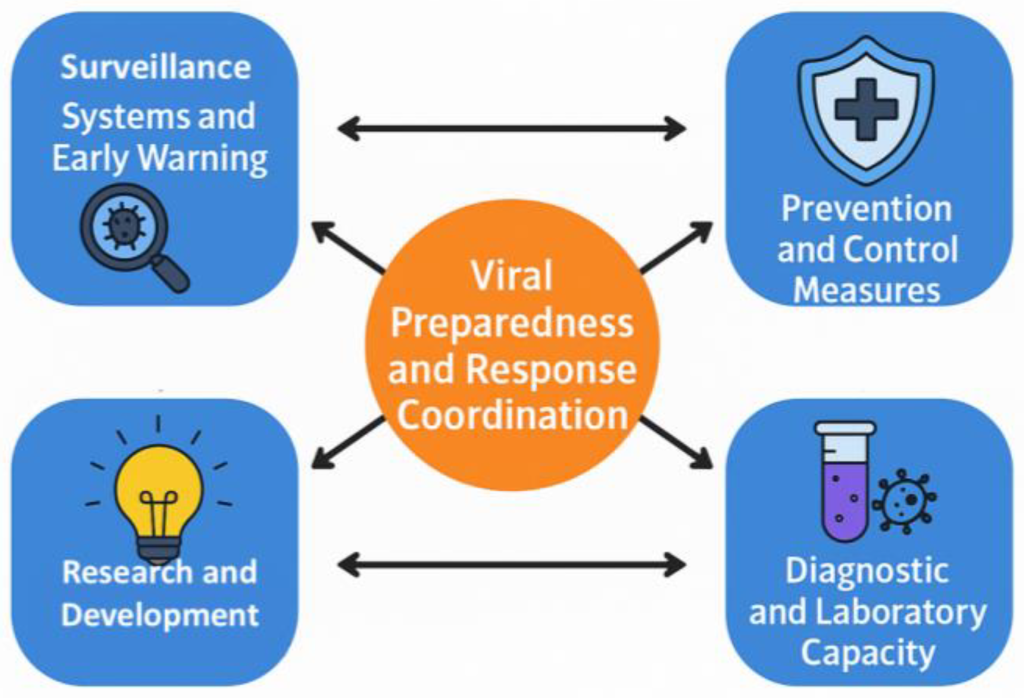
A resilient system also requires early warning, laboratories, epidemiology, infection prevention, clinical care, diagnostics, therapeutics, manufacturing, supply chains, trained health workers, international coordination, transparent communication, and public trust.
WHO’s broader health-emergency framework similarly treats surveillance, community protection, scalable clinical care, access to countermeasures, and emergency coordination as interconnected capabilities rather than isolated activities.
This systems approach is especially important for an unknown pathogen because scientists cannot know in advance which intervention will prove most useful.
Frequently Asked Questions
What is Disease X?
Disease X is WHO terminology acknowledging that a serious international epidemic could be caused by a pathogen currently unknown to cause human disease. It is a preparedness concept rather than the name of a specific infection.
Is Disease X a real disease currently spreading?
No specific disease called “Disease X” has been identified. The term represents an unknown future epidemic threat and allows researchers to plan for pathogens that have not yet emerged as recognized causes of human disease.
What type of pathogen could cause Disease X?
The Disease X concept does not specify a particular organism. Modern WHO preparedness work examines viral families, bacterial threats, prototype pathogens, and potential unknown pathogens so research is not dependent on correctly predicting one future cause.
Can scientists make a Disease X vaccine before the disease exists?
Scientists cannot design a fully pathogen-specific vaccine without knowing the pathogen. They can, however, prepare adaptable vaccine platforms, manufacturing processes, laboratory tools, clinical networks, and knowledge about pathogen families so development can begin faster once the threat is identified.
What is the 100 Days Mission?
The 100 Days Mission is CEPI’s goal of making safe, effective, and accessible vaccines ready for initial authorization and manufacturing at scale within 100 days after a new pandemic threat is identified. It is an ambitious preparedness target rather than a guarantee for every outbreak.
How does genomic sequencing help with Disease X?
Sequencing can reveal a pathogen’s genetic information, support identification and comparison, help researchers monitor changes, and provide data useful for diagnostics and countermeasure development. It works best as part of a broader surveillance and laboratory network.
What does One Health have to do with future pandemics?
One Health connects human, animal, and environmental health. Because many emerging infectious diseases involve animal-to-human transmission, coordinated surveillance across these areas can help identify and sometimes reduce emerging risks earlier.
Can another pandemic be completely prevented?
No preparedness strategy can guarantee that another pandemic will never occur. The purpose of preparedness is to lower risk and respond faster through earlier detection, stronger research infrastructure, medical countermeasures, capable health systems, and coordinated international action.
Conclusion
Disease X is useful precisely because scientists do not know what the next major pandemic threat will be. Disease X Preparedness focuses on building capabilities that remain useful even when the pathogen is unfamiliar: surveillance, genomic science, One Health monitoring, adaptable vaccines, diagnostics, clinical research, manufacturing, and international coordination.

1 Comment
Pingback: Malaria and Dengue Vaccines: Latest Global Health