

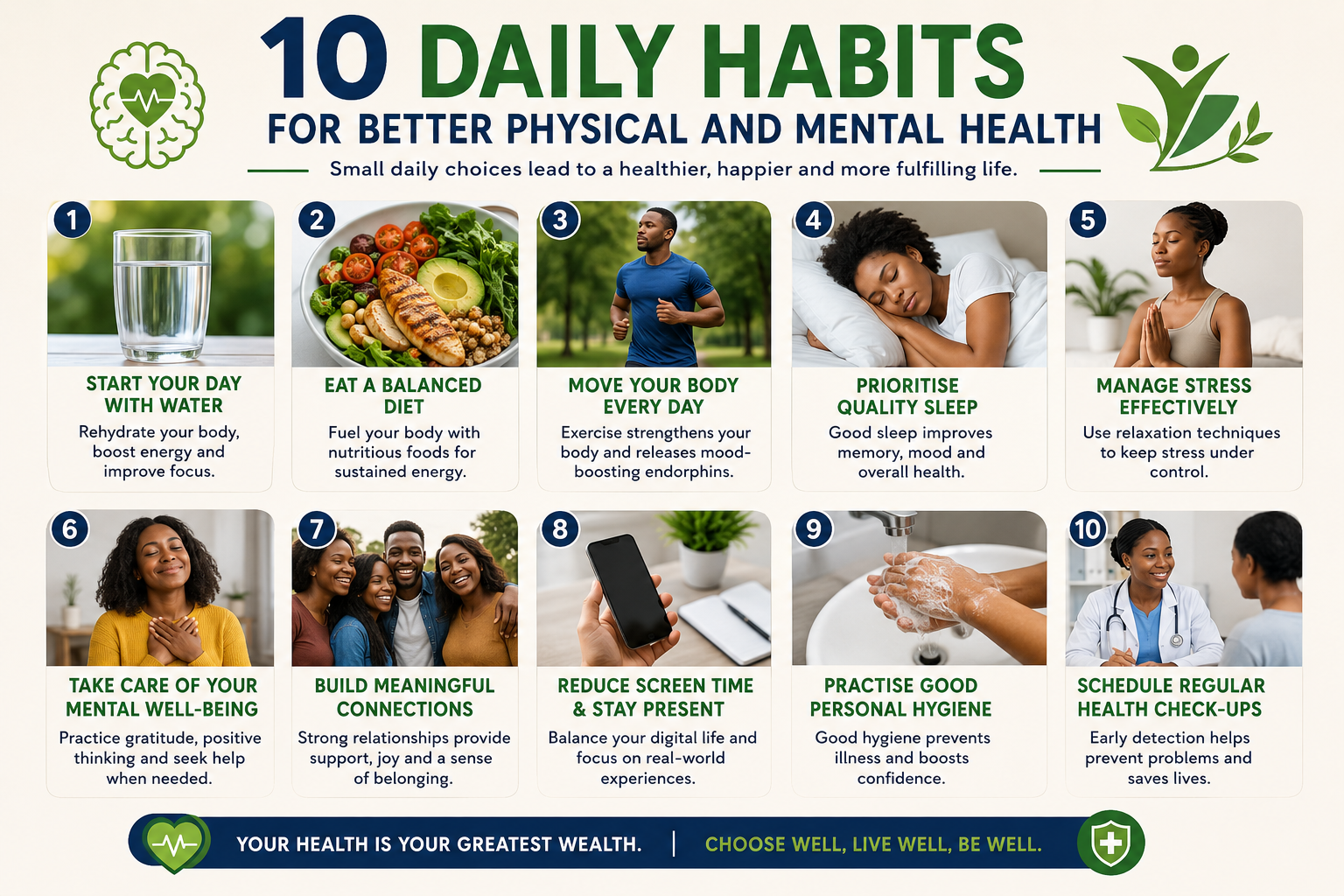
Daily Wellness Tips can improve physical and mental health when they focus on consistent habits rather than perfection. Regular movement, nutritious food, adequate sleep, hydration, social connection, stress management, and preventive care support energy, mood, resilience, and long-term well-being.
The most useful routine is realistic enough to repeat. Small actions such as walking, eating balanced meals, taking screen breaks, protecting sleep, connecting with supportive people, and noticing changes in mood can strengthen health without extreme diets or complicated wellness plans.
What Does Daily Wellness Really Mean?
Wellness is broader than exercise, weight, or eating “healthy” foods.
It includes several interconnected areas:
- physical health;
- mental and emotional well-being;
- sleep;
- nutrition;
- movement;
- social connection;
- stress management;
- preventive healthcare; and
- everyday habits that support functioning and quality of life.
The World Health Organization defines mental health as a state of mental well-being that helps people cope with life’s stresses, use their abilities, work and learn effectively, and contribute to their communities.
Physical and mental health also affect each other.
Poor sleep can influence mood and concentration. Chronic stress can affect sleep and eating habits. Exercise can benefit cardiovascular health while also reducing feelings of anxiety. Social isolation can affect both psychological and physical health.
A useful wellness routine therefore treats these areas as connected rather than independent.
Read More: Heart Disease Prevention: Best Strategies for Better Heart Health
1. Start the Day With a Consistent Routine
A predictable morning routine can reduce unnecessary decision-making and create structure for the rest of the day.
It does not need to involve an elaborate schedule.
A practical morning may include:
- getting up at a reasonably consistent time;
- drinking something if thirsty;
- getting dressed and moving around;
- eating breakfast if it suits your appetite and health needs;
- reviewing the day’s main priorities; and
- avoiding immediately spending a long period scrolling through social media.
The objective is not to create a perfect “5 a.m. routine.”
It is to start the day deliberately rather than reactively.
People with different work schedules, caregiving responsibilities, health conditions, and sleep patterns will naturally need different routines.
2. Move Your Body Every Day
Physical activity is one of the most broadly useful health habits.
CDC reports that even a single session of moderate-to-vigorous activity can improve sleep, reduce feelings of anxiety, and lower blood pressure temporarily. Regular activity is associated with lower risks of heart disease, stroke, type 2 diabetes, depression, and several cancers.
WHO recommends that most adults complete at least 150–300 minutes of moderate-intensity aerobic activity per week, or 75–150 minutes of vigorous activity, alongside muscle-strengthening activity on at least two days.
That does not mean every workout needs to be long or intense.
Useful movement can include:
- brisk walking;
- cycling;
- swimming;
- dancing;
- gardening;
- household activity;
- recreational sport;
- resistance training; or
- active transportation.
A Simple Weekly Movement Example
| Day | Example activity |
|---|---|
| Monday | 30-minute brisk walk |
| Tuesday | Strength training |
| Wednesday | 30-minute walk |
| Thursday | Light movement or stretching |
| Friday | 30-minute brisk walk |
| Saturday | Strength training + outdoor activity |
| Sunday | 30-minute relaxed walk |
Someone who has been inactive does not need to reach the full guideline immediately.
Starting with ten or fifteen minutes of comfortable activity and gradually increasing duration can be more sustainable.
People with significant cardiovascular, respiratory, mobility, or other medical conditions may need individualized exercise guidance.
3. Spend Less Time Sitting
Meeting an exercise target does not necessarily compensate for spending nearly every other hour sitting.
People who work at desks can create more movement through the day by:
- standing during some phone calls;
- walking for a few minutes between tasks;
- using stairs when practical;
- taking brief movement breaks;
- walking after meals; or
- placing commonly used items farther from the desk.
CDC notes that adults who sit less and perform any amount of moderate-to-vigorous activity can gain health benefits.
The goal is not to remain in motion all day.
It is to avoid letting prolonged sitting become the default for nearly every waking hour.
4. Eat for Health, Not Perfection
Healthy eating does not require following one rigid diet.
WHO’s 2026 healthy-diet guidance emphasizes four broad principles:
adequacy, balance, moderation, and diversity.
A nutritious eating pattern can include:
- vegetables;
- fruits;
- whole grains;
- legumes;
- nuts and seeds;
- fish;
- eggs;
- dairy or appropriate alternatives;
- lean meats if included in the diet; and
- unsaturated fats.
WHO recommends that people older than ten aim for at least 400 grams of fruits and vegetables per day and obtain carbohydrates primarily from foods such as whole grains, vegetables, fruit, and pulses.
The exact diet should still reflect culture, food access, allergies, medical conditions, preferences, and energy needs.

5. Build Balanced Meals Instead of Chasing “Superfoods”
No single food can compensate for an otherwise poor diet.
A practical meal can be built around several components:
| Component | Examples |
|---|---|
| Vegetables or fruit | Spinach, carrots, tomatoes, berries, apples |
| Protein | Lentils, beans, eggs, fish, chicken, yogurt |
| Higher-fibre carbohydrate | Oats, brown rice, whole-grain bread, potatoes |
| Healthy fat | Nuts, seeds, olive oil, avocado |
| Drink | Water or another low-sugar option |
The proportions will differ according to individual nutritional needs.
Someone with diabetes, kidney disease, gastrointestinal disease, pregnancy, food allergies, or another medical condition may need specific dietary advice.
6. Reduce Highly Processed Foods Without Making Them “Forbidden”
An all-or-nothing food mentality often makes healthy eating harder to sustain.
Instead of categorizing every food as “good” or “bad,” focus on what makes up most of the diet.
WHO states that healthy dietary patterns are generally built around minimally processed or unprocessed foods and limited amounts of foods high in sodium, free sugars, and unhealthy fats.
Practical swaps could include:
- fruit instead of sweets for some snacks;
- water instead of sugary drinks;
- nuts instead of heavily salted snack foods;
- home-prepared meals more often;
- whole grains instead of refined versions when suitable; and
- legumes or fish in place of some processed meats.
Occasional less-nutritious food does not erase an otherwise balanced diet.
Consistency matters more than dietary perfection.
7. Watch Added Sugar and Sugary Drinks
Sugary beverages can add substantial amounts of free sugar without providing much fullness.
WHO recommends limiting free sugars to less than 10% of total daily energy intake, with additional benefits possible at lower levels.
Common sources include:
- soft drinks;
- sweetened teas;
- energy drinks;
- desserts;
- syrups;
- sweetened coffee drinks; and
- many packaged snacks.
Whole fruit is not equivalent to a sugary soft drink because it contains fibre and other nutrients.
Even fruit juice can contain significant free sugars, which is why WHO recommends limiting it rather than treating unlimited juice as equivalent to whole fruit.
8. Keep Salt Intake Reasonable
Excess sodium can contribute to high blood pressure.
WHO recommends that adults consume less than 5 grams of salt per day, equivalent to less than 2 grams of sodium.
The salt shaker is not always the biggest source.
Significant sodium can come from:
- packaged meals;
- sauces;
- processed meats;
- salty snacks;
- restaurant food;
- stock cubes; and
- processed breads and cheeses.
Checking food labels can make hidden sodium easier to identify.
9. Stay Adequately Hydrated
Water is necessary for normal circulation, temperature regulation, digestion, and other basic physiological functions.
However, there is no universal amount of plain water that every adult must drink daily.
Hydration needs vary according to:
- body size;
- physical activity;
- temperature;
- humidity;
- pregnancy;
- breastfeeding;
- diet;
- illness; and
- certain medications or medical conditions.
Drinking regularly according to thirst is reasonable for many healthy adults.
People exercising heavily or spending long periods in hot environments may need more fluids.
People with heart failure, advanced kidney disease, or other conditions affecting fluid balance should follow medical advice rather than generic hydration targets.
10. Protect Your Sleep
Sleep is not wasted time.
It supports physical recovery, emotional regulation, immune function, concentration, learning, and metabolic health.
CDC recommends:
| Age | Recommended daily sleep |
|---|---|
| Adults 18–60 | 7 or more hours |
| Adults 61–64 | 7–9 hours |
| Adults 65+ | 7–8 hours |
Sleep quality matters in addition to duration.
Someone can spend eight hours in bed but still sleep poorly because of insomnia, frequent awakening, pain, sleep apnea, alcohol, environmental noise, or other causes.
11. Create a More Consistent Sleep Schedule
The body responds to regular patterns.
Helpful sleep habits can include:
- going to bed and waking at similar times;
- keeping the bedroom dark and comfortable;
- reducing stimulating activity immediately before bed;
- avoiding large meals right before sleep when they cause discomfort;
- limiting late caffeine if it interferes with sleep; and
- building a short wind-down routine.
A perfect bedtime is less important than a schedule that allows sufficient sleep consistently.
When Sleep Problems Need Attention
Speak with a healthcare professional if you regularly experience:
- difficulty falling asleep;
- frequent nighttime awakening;
- loud snoring;
- pauses in breathing during sleep;
- waking with choking or gasping;
- extreme daytime sleepiness; or
- persistent fatigue despite sufficient time in bed.
These can sometimes indicate treatable sleep disorders.
12. Use Physical Activity to Support Mental Health
Exercise should not be promoted as a cure for every mental health problem.
However, it can be a useful part of mental well-being.
CDC reports that physical activity can reduce short-term feelings of anxiety and, when performed regularly, reduce the risk of depression and anxiety while supporting sleep and cognitive health.
It does not have to mean intense gym training.
A walk outdoors, recreational sport, cycling, swimming, or dancing can all count.
For someone experiencing depression or severe anxiety, beginning with a small amount of activity may be more realistic than setting an ambitious fitness programme.
Professional treatment should still be sought when symptoms require it.
13. Create Short Periods of Mental Recovery
Modern routines can expose people to continuous stimulation.
Work notifications, social media, news, messaging, and entertainment can occupy nearly every quiet moment.
Short intentional pauses may help reduce mental overload.
Examples include:
- five minutes without a screen;
- slow breathing;
- stretching;
- sitting outdoors;
- journaling;
- prayer or meditation;
- listening to calming music; or
- taking a short walk.
These practices are not substitutes for mental-health treatment.
Their role is to create manageable periods of recovery during ordinary life.
14. Manage Stress Instead of Trying to Eliminate It
Some stress is unavoidable.
Work, finances, relationships, illness, caregiving, and major life events can all create legitimate pressure.
The goal is not to achieve a completely stress-free life.
A better approach is to identify:
- what is causing the stress;
- which parts can be changed;
- which parts require acceptance or adaptation;
- what support is available; and
- whether the stress has become severe enough to require professional help.
Physical activity, sleep, social support, organization, relaxation techniques, and counseling can all form part of stress management.
15. Maintain Real Social Connections
Social health deserves the same attention as physical and mental health.
WHO’s 2025 Commission on Social Connection reported that roughly one in six people worldwide experience loneliness and linked social isolation and loneliness with poorer physical and mental health.
Quality matters more than collecting a large number of contacts.
Useful social connection may involve:
- speaking with family;
- meeting friends;
- joining a community group;
- participating in sport;
- volunteering;
- attending religious or cultural gatherings;
- checking on someone regularly; or
- asking for help when needed.
WHO describes healthy social connection in terms of the number of relationships, the support they provide, and the quality of those interactions.
16. Be Intentional About Social Media and Screen Use
Digital technology can support connection, work, education, and entertainment.
The problem is not simply “screen time.”
The context matters.
Online activity becomes less helpful when it repeatedly:
- replaces sleep;
- interrupts work;
- increases comparison or distress;
- exposes someone to harassment;
- displaces in-person relationships;
- encourages prolonged inactivity; or
- becomes difficult to control.
WHO has specifically highlighted concerns about excessive digital-media use and negative online interactions, particularly for younger people.
A practical approach is to identify which digital activities genuinely add value and which simply consume attention.
17. Step Outside Regularly
Outdoor activity can combine several useful habits:
- physical movement;
- a break from screens;
- environmental variety;
- social contact;
- recreation; and
- exposure to daylight.
A walk in a park is not a treatment for a mental health condition, but it can be a useful component of a balanced routine.
For people who work indoors, even short outdoor breaks may make the day feel less sedentary and repetitive.
Sun protection remains important when ultraviolet exposure is significant.
18. Avoid Tobacco and Nicotine Dependence
Wellness advice sometimes focuses on supplements and small dietary details while ignoring much larger health risks.
Avoiding tobacco remains one of the most important long-term health behaviors.
People who currently smoke should not interpret difficulty quitting as lack of willpower.
Nicotine dependence is treatable.
Evidence-based cessation approaches can include:
- counseling;
- behavioral support;
- nicotine replacement; and
- prescription treatment where appropriate.
Someone attempting to quit can discuss available options with a healthcare professional or local cessation service.
19. Be Careful With Alcohol as a “Stress Reliever”
Alcohol can temporarily make someone feel more relaxed, but using it as a primary coping mechanism can create additional problems.
Alcohol can affect:
- sleep quality;
- judgment;
- mood;
- blood pressure;
- liver health;
- medication safety; and
- risk of dependence.
People who do not drink alcohol do not need to start for wellness purposes.
Anyone finding it difficult to control drinking should seek professional support rather than relying on motivation alone.
20. Use Caffeine Strategically
Coffee and tea can fit into a healthy diet for many adults.
Problems can arise when caffeine:
- interferes with sleep;
- worsens anxiety or palpitations;
- replaces adequate food or hydration;
- is consumed through high-sugar drinks; or
- becomes necessary just to overcome chronic sleep deprivation.
If sleep is poor, shifting caffeine earlier in the day may be more useful than adding another sleep supplement at night.
Individual sensitivity varies substantially.
21. Protect Time for Enjoyable Activities
Health is not only about avoiding disease.
Activities that provide enjoyment, curiosity, creativity, or meaning can support quality of life.
These may include:
- reading;
- gardening;
- cooking;
- music;
- art;
- sport;
- learning;
- crafts;
- spending time outdoors; or
- community activities.
A hobby does not need to generate income or improve productivity to be worthwhile.
Leisure itself can have value.
22. Make Your Routine Easier to Follow
People often design wellness plans for their most motivated day.
A better strategy is to design them for an ordinary busy day.
Instead of:
“I will work out for 90 minutes every morning.”
try:
“I will walk for 20 minutes after lunch, and exercise longer when I have time.”
Instead of:
“I will never eat processed food again.”
try:
“Most of my meals will contain vegetables, protein, and a higher-fibre carbohydrate.”
Instead of:
“I will meditate for an hour daily.”
try:
“I will spend five quiet minutes away from my phone before bed.”
The easier a healthy behavior is to repeat, the more useful it becomes.
23. Change One or Two Habits at a Time
Trying to transform sleep, diet, exercise, work, stress, and social life simultaneously often creates an unsustainable routine.
Start with the highest-value changes.
For example:
Week 1
- establish a more consistent bedtime;
- walk 15 minutes daily.
Week 2
- increase walking;
- replace one sugary drink.
Week 3
- add two strength sessions;
- prepare more balanced lunches.
Week 4
- add regular social or relaxation time.
This approach allows habits to become established before more are added.
24. Track Trends, Not Perfect Numbers
Wearable devices and wellness apps can be useful, but they can also make people overly focused on daily scores.
A single poor sleep score, missed workout, or high-stress day usually matters less than the overall pattern.
Useful things to notice include:
- average sleep;
- weekly movement;
- changes in mood;
- resting energy;
- frequency of headaches;
- ability to concentrate;
- food habits; and
- whether routines are becoming easier.
Technology should help decision-making rather than become another source of anxiety.
25. Do Not Use Supplements as a Shortcut
Supplements can be useful when a genuine nutritional deficiency or clinical indication exists.
They should not automatically replace:
- balanced eating;
- sleep;
- exercise;
- medical treatment; or
- preventive healthcare.
“Natural” does not guarantee that a product is effective, safe, or free from medication interactions.
Someone taking prescription medication, living with chronic disease, pregnant, or planning high-dose supplementation should review products with an appropriate healthcare professional.
26. Keep Up With Preventive Healthcare
Feeling well does not mean every health risk is visible.
Preventive care may include, depending on age and individual risk:
- blood-pressure checks;
- cholesterol testing;
- diabetes screening;
- vaccinations;
- dental care;
- vision examinations;
- cancer screening;
- sexual and reproductive healthcare; and
- mental-health assessment.
The correct schedule varies according to age, sex, family history, health conditions, medications, and national guidance.
Prevention is more effective when problems are identified before they become advanced.
27. Pay Attention to Changes in Mental Health
Everyone has difficult days.
Concern becomes greater when changes are persistent, severe, or begin interfering with ordinary functioning.
Consider professional support if symptoms such as the following continue or worsen:
- persistent sadness;
- ongoing anxiety;
- loss of interest or pleasure;
- major changes in sleep;
- difficulty concentrating;
- feelings of hopelessness;
- inability to manage ordinary responsibilities;
- significant withdrawal from others; or
- escalating substance use.
WHO emphasizes that effective strategies exist to protect and restore mental health and that mental-health conditions deserve appropriate care.
Thoughts of self-harm or suicide require urgent professional or emergency support.
28. A Practical Daily Wellness Routine
The best wellness routine is one that fits real life.
| Time | Simple wellness action |
|---|---|
| Morning | Wake consistently, move briefly, eat according to needs |
| Work or study | Take periodic movement and screen breaks |
| Meals | Include varied minimally processed foods |
| Afternoon | Walk or complete another form of activity |
| Evening | Connect with someone or spend time on an enjoyable activity |
| Before bed | Reduce stimulation and prepare for sleep |
| Throughout day | Drink according to hydration needs and notice stress levels |
This is only a framework.
Shift workers, parents, students, older adults, athletes, and people with chronic illness may need completely different schedules.
29. Which Wellness Habits Have the Biggest Impact?
Not every wellness habit deserves equal attention.
Someone sleeping four hours per night is likely to gain more from improving sleep than from buying a new supplement.
Someone who smokes regularly may gain far more from smoking cessation than from optimizing minor dietary details.
Someone who rarely moves may benefit more from walking consistently than from debating which exercise programme is theoretically ideal.
A useful priority order is:
address major health risks first, establish basic daily habits second, and optimize smaller details last.
That keeps wellness evidence-based and practical.
30. Wellness Should Adapt to Your Health, Not Ignore It
Generic wellness advice has limits.
Someone living with:
- diabetes;
- heart disease;
- kidney disease;
- chronic pain;
- an eating disorder;
- pregnancy;
- severe depression;
- mobility limitations; or
- another significant health condition
may need a modified routine.
For example, generic advice to “drink more water,” “fast,” or “exercise harder” could be inappropriate in certain medical situations.
People-first wellness means adjusting healthy habits to the individual instead of forcing everyone into the same routine.
Frequently Asked Questions
What are the best daily wellness tips?
The highest-value habits generally include regular physical activity, nutritious eating, sufficient sleep, avoiding tobacco, managing stress, maintaining supportive relationships, and keeping up with preventive healthcare. The best routine is one that can be maintained consistently.
How much exercise should adults get each week?
WHO recommends at least 150–300 minutes of moderate aerobic activity or 75–150 minutes of vigorous activity per week for most adults, plus muscle-strengthening activities on at least two days.
How many hours of sleep do adults need?
CDC recommends at least seven hours for adults aged 18–60, seven to nine hours for ages 61–64, and seven to eight hours for adults aged 65 and older. Individual needs and sleep quality also matter.
What foods are best for daily health?
No single food is best. WHO recommends a varied diet based largely on minimally processed foods such as vegetables, fruits, whole grains, legumes, nuts, and appropriate protein sources while limiting excess sodium, free sugars, and unhealthy fats.
Can exercise improve mental health?
Yes. Regular physical activity is associated with reduced risks of depression and anxiety and can produce short-term reductions in feelings of anxiety. It can also improve sleep. Exercise should complement professional mental-health treatment when treatment is needed.
Why is social connection important for health?
WHO identifies social connection as an important determinant of physical and mental health. Loneliness and social isolation are associated with depression, anxiety, cardiovascular disease, type 2 diabetes, cognitive decline, and premature mortality.
Do I need supplements for good wellness?
Not automatically. Most people should first focus on a nutritious diet and appropriate medical care. Supplements may be useful for confirmed deficiencies or particular clinical needs, but unnecessary or high-dose products can cause side effects or interact with medication.
How quickly should I change my lifestyle?
There is no requirement to change everything immediately. For most people, choosing one or two achievable behaviors, repeating them consistently, and gradually building on them is more realistic than attempting an extreme lifestyle overhaul.
Conclusion
Daily Wellness Tips are most effective when they strengthen the foundations of health: movement, nutritious food, adequate sleep, social connection, stress management, preventive care, and sustainable routines.

1 Comment
Pingback: Science of Sleep: How Quality Rest Improves Overall Health