

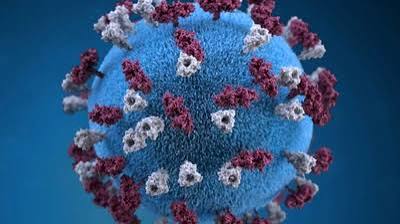
Measles cases are rising in many countries because vaccination coverage has not recovered enough to close immunity gaps. Missed childhood doses, conflict, displacement, unequal access to health services, and declining vaccine confidence allow this highly contagious virus to spread through susceptible communities.
Staying protected starts with knowing your vaccination status, recognizing exposure risks, and acting quickly after contact with a confirmed case. Two measles-containing vaccine doses provide strong protection, while timely public-health guidance helps limit outbreaks and protect vulnerable people.
Why Are Measles Cases Rising Again?
Measles is preventable, yet outbreaks are increasing because too many people remain unvaccinated or incompletely vaccinated.
WHO and UNICEF reported that in 2025, about 84% of children globally received a first measles-containing vaccine dose and 77% received a second dose. Both figures remain below the approximately 95% coverage needed to reliably prevent outbreaks. Fifty-seven countries reported large or disruptive measles outbreaks during 2025.
The problem is especially important because measles spreads much more easily than many other infectious diseases.
When immunity falls in a community, even a relatively small introduction of the virus can produce a significant outbreak.
Read More: Malaria and Dengue Vaccines: Latest Global Health Breakthroughs
The Main Reasons Behind the Measles Resurgence
There is no single explanation for rising measles cases. Several factors frequently overlap.
1. Too Many Children Are Missing Vaccine Doses
The biggest underlying issue is an immunity gap.
WHO recommends that children receive two doses of a measles-containing vaccine because some children do not develop sufficient immunity after one dose.
Global coverage remains below the level required to interrupt transmission consistently. WHO estimated that approximately 29 million infants were under-protected against measles in 2025.
When these missed doses accumulate over several years, the number of susceptible people grows.
Eventually, the virus can find enough unprotected people to sustain an outbreak.
2. Routine Immunization Has Not Fully Recovered Everywhere
Vaccination programmes were disrupted in many places during and after the COVID-19 pandemic.
Although immunization services have improved, WHO and UNICEF reported in 2026 that global childhood vaccination coverage was still not fully back to pre-pandemic levels.
Missed appointments create a long-term problem because an unvaccinated child does not automatically become protected when routine services resume.
Catch-up vaccination is therefore essential.
3. Conflict, Displacement and Poverty Disrupt Health Services
Vaccinating almost every child requires reliable clinics, trained health workers, cold-chain systems, vaccine supplies, transportation and community outreach.
War, displacement, humanitarian emergencies and poverty can disrupt all of these systems.
WHO and UNICEF have specifically identified conflict, displacement and poverty among the factors leaving millions of children without routine vaccines.
People living in refugee settlements, temporary housing or areas with weakened health infrastructure may also face conditions that make outbreaks harder to control.

4. Vaccine Hesitancy Creates Local Immunity Gaps
National vaccination statistics can sometimes hide what is happening at community level.
A country might have relatively high average vaccination coverage while particular towns, schools or communities have much lower coverage.
Those local clusters matter.
Measles does not require an entire country to have low vaccination rates. It needs a sufficiently large group of susceptible people who regularly come into contact with one another.
Falling confidence in vaccines can therefore create concentrated pockets where the virus spreads rapidly.
5. International Travel Can Reintroduce Measles
Measles continues to circulate in many parts of the world.
An infected traveler can carry the virus from one country to another before realizing they are sick.
This is especially important because people with measles can spread the virus before the characteristic rash appears.
WHO notes that as long as measles circulates somewhere in the world, countries remain vulnerable to imported infections unless population immunity remains high.
Travel itself is therefore not the underlying cause of outbreaks.
The larger problem is what happens after an imported case reaches a community containing many susceptible people.
Why Measles Spreads So Easily
Measles is one of the world’s most contagious infectious diseases.
It spreads primarily through the air when an infected person breathes, coughs or sneezes.
CDC reports that the virus can remain infectious in an airspace for up to two hours after an infected person has left. Among people without immunity who are close to someone with measles, up to 90% may become infected.
That exceptional contagiousness explains why modest vaccination gaps can cause substantial outbreaks.
When Is Someone With Measles Contagious?
A person can generally spread measles from:
Four days before the rash appears through four days after rash onset.
This creates a major challenge.
Someone may attend school, work, public transport, a clinic, an airport or a social event before realizing that they have measles.
The 95% Vaccination Threshold Explained
Public-health agencies repeatedly emphasize approximately 95% two-dose measles vaccination coverage.
Why is the target so high?
Because measles spreads extremely efficiently.
A disease that transmits easily requires a very high proportion of the population to be immune before sustained transmission becomes difficult.
WHO states that 95% or greater coverage with two measles vaccine doses is needed in communities to prevent outbreaks effectively.
This does not mean an outbreak automatically begins when coverage falls to 94%.
It means that the lower coverage drops—and the more geographically concentrated unvaccinated people become—the greater the opportunity for transmission.
How Effective Is the Measles Vaccine?
The measles vaccine is one of the most effective routine vaccines available.
According to CDC:
| Vaccination status | Approximate protection against measles |
|---|---|
| One MMR dose | 93% |
| Two MMR doses | 97% |
The vaccine may be given as:
- MMR: measles, mumps and rubella;
- MR: measles and rubella;
- MMRV: measles, mumps, rubella and varicella; or
- another measles-containing formulation used within a national programme.
Exact vaccine schedules vary between countries.
WHO recommends that all children receive two measles-containing vaccine doses.
Why Two Measles Vaccine Doses Are Needed
Most people respond well to their first dose, but not everyone develops adequate immunity.
The second dose gives another opportunity for people who did not respond fully to the first dose to become protected.
It should therefore not be viewed simply as a routine booster that can easily be skipped.
Maintaining high two-dose coverage is one of the most important tools for preventing outbreaks.
Measles Is More Than a Childhood Rash
Measles is sometimes incorrectly treated as a minor childhood illness.
It can cause serious complications.
WHO identifies complications including:
- pneumonia;
- encephalitis, or inflammation of the brain;
- severe diarrhoea and dehydration;
- ear infections;
- blindness; and
- death.
WHO estimated that approximately 95,000 people died from measles globally in 2024, primarily unvaccinated or under-vaccinated children younger than five.
Vaccination prevented an estimated 59 million measles deaths between 2000 and 2024.
Who Is Most Vulnerable to Severe Measles?
Anyone without immunity can become infected, but some groups have a greater risk of serious complications.
These include:
- infants and young children;
- pregnant women;
- people with weakened immune systems;
- malnourished children;
- people with vitamin A deficiency; and
- adults who develop measles, particularly older adults.
CDC also identifies children under five, adults over 20, pregnant people and immunocompromised individuals as groups at increased risk of serious complications.
Protection of these groups depends partly on keeping transmission low throughout the wider community.
What Are the First Symptoms of Measles?
Symptoms usually do not begin immediately after exposure.
CDC states that initial symptoms commonly appear about 7–14 days after infection.
Early symptoms often include:
- high fever;
- cough;
- runny nose;
- red or watery eyes; and
- fatigue or general illness.
Small white spots known as Koplik spots may appear inside the mouth.
Several days later, the typical rash usually begins around the face and hairline before spreading downward across the body.
Because fever and respiratory symptoms develop before the rash, measles can initially resemble other infections.
What Should You Do If You Think You Have Measles?
Do not simply arrive unannounced at a crowded clinic or waiting room.
Because measles is airborne and highly contagious, that could expose other patients.
Instead:
- Call your healthcare provider first.
- Explain your symptoms and any known exposure.
- Mention recent international travel if relevant.
- Follow instructions about where and how to be evaluated.
- Avoid contact with people who may not be immune.
CDC specifically advises people who suspect measles to contact a healthcare provider before arriving so appropriate infection-control arrangements can be made.
Urgent or rapidly worsening symptoms require emergency medical evaluation. If emergency care is needed, the facility should ideally be informed before arrival.
What Should You Do After Measles Exposure?
Exposure does not necessarily mean you will become sick.
The first question is whether you already have evidence of immunity.
Contact a healthcare provider or public-health authority promptly rather than waiting for symptoms.
Depending on your immunity, age, health status and time since exposure, preventive treatment may still be possible.
MMR Vaccine After Exposure
For eligible susceptible people, CDC states that an MMR vaccine given within 72 hours of initial exposure may prevent measles or make the illness milder.
Immune Globulin After Exposure
Certain susceptible people may receive immune globulin within six days of exposure.
This can be especially relevant for people at greater risk of severe disease who cannot receive MMR vaccination.
Eligibility should be determined by a healthcare professional or public-health authority.
Because these interventions are time-sensitive, possible exposure should be reported promptly.
How to Stay Protected From Measles
Protection starts before an outbreak occurs.
1. Check Your Vaccination Records
Do not assume you are fully vaccinated.
Check your own records and your children’s immunization records.
If documentation is missing or incomplete, ask a healthcare provider whether vaccination or another assessment of immunity is appropriate.
WHO advises people with missed childhood doses to catch up as soon as possible.
2. Complete the Recommended Two-Dose Series
One dose provides strong protection, but two doses provide better protection.
Children should receive both scheduled doses according to their national immunization programme.
Adults without adequate evidence of immunity may also need vaccination depending on age, occupation, travel and other risk factors.
3. Check Requirements Before International Travel
International travel can increase exposure risk because measles circulation differs by country.
Travelers should check their vaccination status before departure.
CDC recommends that international travelers who require vaccination receive appropriate MMR protection before travel and notes that even vaccination less than two weeks before departure can still be worthwhile.
Local schedules and recommendations may differ, so travelers should use guidance from their national health authority.
4. Respond Quickly to Outbreak Alerts
During an outbreak, public-health authorities may recommend additional vaccination measures for particular groups.
Recommendations may depend on:
- age;
- vaccination history;
- location;
- exposure history;
- occupation; or
- current outbreak conditions.
Follow local outbreak guidance rather than assuming routine recommendations cover every situation.
5. Avoid Exposing Others if Symptoms Develop
A person who may have measles should minimize contact with others and contact a healthcare provider before seeking in-person care.
This is especially important around:
- babies;
- pregnant women;
- immunocompromised people; and
- unvaccinated individuals.
Who Should Talk to a Doctor Before Receiving MMR?
MMR is a live attenuated vaccine and is not appropriate for everyone.
CDC states that it should not be given during pregnancy or to people with certain severe immunocompromising conditions. People with a history of severe allergic reactions to vaccine components and some other medical circumstances also require individual assessment.
Anyone who is pregnant, severely immunocompromised, receiving immunosuppressive treatment or uncertain about a previous serious vaccine reaction should discuss vaccination with a healthcare professional.
This does not make measles prevention less important.
People who cannot receive a live vaccine often depend even more on high vaccination coverage among the people around them.
Is the MMR Vaccine Linked to Autism?
No.
Extensive scientific research has found no causal connection between MMR vaccination and autism.
CDC states that studies conducted in the United States and other countries have found no link between MMR vaccine and autism.
This matters for measles control because misinformation about vaccine safety can lower vaccination coverage and create communities in which outbreaks become easier to sustain.
Can Vaccinated People Still Get Measles?
Yes, but it is uncommon.
No vaccine is 100% effective.
Approximately 3% of people who receive two MMR doses may remain susceptible based on the vaccine’s estimated 97% effectiveness.
Vaccination still dramatically lowers an individual’s risk compared with remaining unvaccinated.
A small number of breakthrough cases therefore does not mean that the vaccine is ineffective.
Does Previous Measles Infection Provide Immunity?
People who have had laboratory-confirmed measles generally develop long-lasting immunity.
However, someone who merely remembers having a childhood rash should not automatically assume that it was measles.
Many infections can cause rashes.
When proof of immunity is important, vaccination records, laboratory evidence or professional medical assessment are more reliable than memory alone.
Why Outbreaks Can Occur Even in Highly Vaccinated Countries
A country’s national average does not show exactly how immunity is distributed.
Consider two hypothetical communities:
| Community | Two-dose coverage | Outbreak risk |
|---|---|---|
| Community A | 98% | Relatively low |
| Community B | 80% | Much higher |
| National average | 89% | Hides the local difference |
If susceptible individuals are concentrated in the same schools, neighborhoods, religious communities or social networks, measles can spread efficiently even when other parts of the country have excellent vaccination coverage.
This is why public-health officials focus not only on national averages but also on local immunity gaps.
Are Current Outbreaks Only a Problem in Low-Income Countries?
No.
Countries with weaker health infrastructure may face particularly severe consequences, but measles outbreaks can occur anywhere vaccination coverage drops.
For example, CDC reported 2,777 confirmed U.S. measles cases during 2026 as of August 20, across 47 reporting jurisdictions.
The broader lesson is that previous success against measles does not provide permanent protection to a country.
High vaccination coverage must be maintained continuously.
What Role Does Public-Health Surveillance Play?
Vaccination prevents infections, while surveillance helps stop outbreaks from expanding.
Effective measles surveillance involves:
- recognizing suspected cases quickly;
- laboratory confirmation;
- identifying exposed contacts;
- determining vaccination status;
- tracing transmission chains;
- notifying affected communities;
- offering vaccination or post-exposure protection where appropriate; and
- identifying areas with low immunization coverage.
Measles is especially useful as an indicator of health-system weakness because its extreme contagiousness rapidly exposes gaps in population immunity.
Can Better Hygiene Alone Prevent Measles?
Not reliably.
Handwashing and general infection-prevention practices remain useful for many diseases, but measles is primarily an airborne infection and spreads exceptionally efficiently.
Someone can become infected simply by entering an enclosed space after an infectious person has left because the virus may remain in the air for up to two hours.
That is why vaccination is the central preventive measure.
What About Vitamin A for Measles?
Vitamin A has a recognized role in the clinical management of children with measles.
WHO recommends prompt vitamin A treatment for children diagnosed with measles because deficiency can worsen complications, including eye damage.
However, high-dose vitamin A should be managed according to clinical guidance rather than self-prescribed.
Vitamin A is not a substitute for measles vaccination.
How Communities Can Reduce Future Measles Outbreaks
Stopping the resurgence requires more than responding after outbreaks begin.
Health systems need to:
- maintain routine childhood vaccination;
- identify children who missed doses;
- run targeted catch-up campaigns;
- strengthen disease surveillance;
- maintain reliable vaccine supplies;
- reach displaced and underserved populations;
- communicate vaccine information clearly;
- counter health misinformation with evidence; and
- rapidly investigate suspected cases.
The fundamental objective is simple: prevent immunity gaps from accumulating.
Frequently Asked Questions
Why are measles cases increasing now?
The main driver is insufficient vaccination coverage. Missed childhood doses, disrupted health services, conflict, displacement, poverty, vaccine hesitancy and clusters of unvaccinated people have created immunity gaps that allow the highly contagious virus to spread.
How contagious is measles?
Measles is extremely contagious. CDC reports that up to 90% of nearby susceptible people may become infected after exposure, and the virus can remain infectious in an airspace for up to two hours.
How effective are two MMR doses?
Two MMR doses are approximately 97% effective against measles, compared with about 93% effectiveness after one dose.
Can adults get measles?
Yes. Any person without adequate immunity can contract measles. Adults can also experience serious complications, so people who are uncertain about their immunity should discuss their vaccination history with a healthcare professional.
What should I do if I have been exposed to measles?
Contact a healthcare provider or public-health authority immediately. Eligible susceptible people may receive MMR vaccine within 72 hours of exposure or immune globulin within six days, depending on their circumstances.
Should I go directly to a clinic if I think I have measles?
Call before arriving whenever possible. Healthcare facilities need to prevent an infectious patient from exposing people in waiting rooms or other shared spaces.
Can pregnant women receive the MMR vaccine?
MMR vaccination is contraindicated during pregnancy because it is a live attenuated vaccine. Someone who is pregnant and exposed to measles should contact a healthcare professional promptly for individualized advice.
Is measles still dangerous if most people recover?
Yes. Measles can cause pneumonia, encephalitis, severe diarrhoea, blindness and death. Young children, pregnant women, immunocompromised people and other vulnerable groups face greater risks of severe complications.
Conclusion
Rising measles cases are primarily a warning that vaccination gaps have grown large enough for an extremely contagious virus to spread again. The most effective protection is maintaining complete measles vaccination, checking immunity before travel, responding quickly after exposure and following local public-health guidance during outbreaks.

1 Comment
Pingback: Type 2 Diabetes and Liver Health: Risks, Causes