

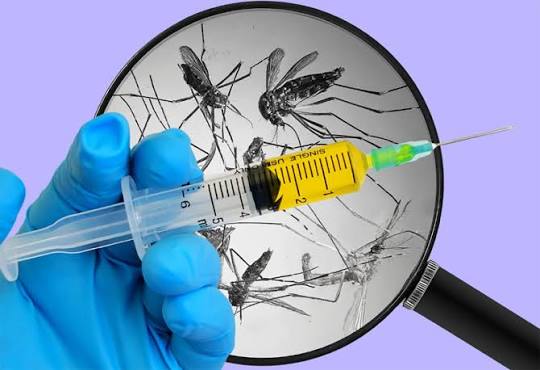
Malaria and Dengue Vaccines are reshaping prevention against two mosquito-borne diseases that still place major pressure on health systems worldwide. Recent advances include wider malaria vaccine rollout in Africa and newer dengue vaccine options designed for high-transmission settings and populations.
These breakthroughs are important, but they are not interchangeable or complete solutions. Malaria is caused by parasites, while dengue is caused by four related viruses, so vaccine strategies, schedules, eligible age groups, evidence standards, and public-health use differ between them.
Why Malaria and Dengue Vaccines Matter
Malaria and dengue are both transmitted by mosquitoes, but they are biologically very different diseases.
Malaria is caused by Plasmodium parasites. The most dangerous species globally is Plasmodium falciparum, which causes most malaria deaths in Africa.
Read More: Disease X Preparedness: How Scientists Are Fighting Future Pandemics
Dengue, by contrast, is caused by four related dengue virus serotypes: DENV-1, DENV-2, DENV-3, and DENV-4. Infection with one serotype does not provide permanent protection against the other three, and a later infection with another serotype can sometimes carry a greater risk of severe disease.
This biological complexity made both diseases unusually difficult vaccine targets.
The recent arrival and expansion of effective vaccines therefore represents an important shift in global health.
| Feature | Malaria | Dengue |
|---|---|---|
| Cause | Plasmodium parasites | Dengue viruses |
| Main mosquito vectors | Anopheles mosquitoes | Mainly Aedes aegypti and Aedes albopictus |
| Vaccine strategy | Primarily protects children against P. falciparum malaria | Must address four dengue serotypes |
| Major WHO-recommended vaccines | RTS,S/AS01 and R21/Matrix-M | TAK-003 in specified settings |
| Other prevention remains needed? | Yes | Yes |
The Malaria Vaccine Breakthrough Is Now Becoming a Public-Health Programme
For decades, a malaria vaccine was one of infectious-disease research’s most difficult goals.
That changed first with RTS,S/AS01 and then with R21/Matrix-M.
WHO currently recommends both vaccines for preventing P. falciparum malaria in children living in malaria-endemic areas, with priority given to moderate- and high-transmission settings.
Their significance is no longer limited to clinical trials.
By early 2026, 25 African countries were offering malaria vaccines through childhood immunization programmes and national malaria-control strategies. WHO reported that more than 10 million children per year were being targeted across those countries.
Gavi also reported that more than 39 million malaria vaccine doses had been delivered to 25 endemic African countries by January 2026.
That transition—from scientific possibility to routine vaccination—is one of the most important recent malaria-control developments.
RTS,S and R21: What Are the Two Malaria Vaccines?
The two WHO-recommended malaria vaccines are:
- RTS,S/AS01
- R21/Matrix-M
Both target P. falciparum, the deadliest malaria parasite globally and the dominant malaria parasite in Africa.
RTS,S/AS01
RTS,S was the first malaria vaccine recommended by WHO.
Its implementation in Ghana, Kenya, and Malawi provided crucial real-world evidence about whether malaria vaccination could be safely integrated into routine childhood immunization programmes.
Those pilot programmes also provided data on hospitalizations, severe malaria, vaccination coverage, and child survival.
R21/Matrix-M
R21 became the second WHO-recommended malaria vaccine.
Its availability is especially important because a second supplier can increase vaccine supply and give national programmes more flexibility when planning large-scale immunization.
WHO has stated that available evidence does not justify claiming that either RTS,S or R21 is generally superior to the other. They have not been compared in a direct head-to-head efficacy trial, and studies were performed under different conditions.
Countries can therefore consider factors such as supply, programme logistics, affordability, and availability when selecting a product.
How Effective Are Malaria Vaccines?
Vaccine effectiveness depends on factors including transmission patterns, schedule, population, and how malaria exposure changes over time.
For R21, trials in highly seasonal malaria settings found that vaccination given before the malaria season reduced symptomatic malaria episodes substantially during the following year. Age-based vaccination also demonstrated protection in other transmission settings.
But percentage efficacy from a clinical trial does not tell the entire public-health story.
One of the most important findings arrived in May 2026.
WHO reported results from the Malaria Vaccine Implementation Programme in Ghana, Kenya, and Malawi showing that, across four years, an estimated one in eight child deaths was averted among children eligible for malaria vaccination.
That matters because the ultimate purpose of a malaria vaccine is not simply to prevent laboratory-confirmed infections. It is to reduce severe illness, hospitalizations, and preventable deaths when combined with other malaria interventions.
Why the 2026 Malaria Evidence Is So Important
Clinical trials answer whether a vaccine can work under controlled research conditions.
Large vaccination programmes answer another question: can it create meaningful health benefits when delivered through real health systems?
The Ghana, Kenya, and Malawi evidence helps bridge that gap.
It also showed that introducing malaria vaccination did not reduce use of other childhood vaccines or established malaria interventions such as insecticide-treated mosquito nets.
That supports a central public-health principle:
Malaria vaccination works best as an additional layer of protection, not as a replacement for existing malaria control.
What Is the Recommended Malaria Vaccine Schedule?
WHO recommends a four-dose malaria vaccine schedule beginning from around five months of age.
Depending on local transmission patterns, programmes may adjust timing, use seasonal delivery, or combine age-based and seasonal approaches.
A fifth dose may also be considered in some settings where substantial malaria risk continues after the fourth dose.
The exact national schedule can therefore differ according to local malaria epidemiology and immunization policy.
Parents and caregivers should follow the vaccination schedule issued by their country’s health authorities rather than trying to apply a schedule designed for another country.

Malaria Vaccines Do Not Replace Mosquito Nets or Treatment
Malaria vaccines offer partial protection.
WHO therefore recommends vaccination as part of a comprehensive malaria-control strategy.
Other important interventions include:
- insecticide-treated mosquito nets;
- indoor residual spraying where appropriate;
- prompt malaria testing;
- effective antimalarial treatment;
- seasonal malaria chemoprevention in eligible areas;
- preventive treatment strategies for specific populations; and
- mosquito and parasite surveillance.
Layering interventions is particularly important because mosquito resistance to insecticides and parasite resistance to medicines can threaten individual malaria-control tools.
The Dengue Vaccine Challenge Is Different
Dengue vaccine development has faced a separate scientific challenge.
Instead of targeting one dominant pathogen type, dengue vaccines must account for four dengue serotypes.
A person infected with one serotype generally gains lasting immunity to that serotype, but only limited temporary protection against the others. Subsequent infection with another serotype can be associated with increased risk of severe dengue.
A successful dengue vaccine therefore needs a carefully assessed benefit-risk profile across multiple serotypes and different groups of people.
This helps explain why dengue vaccination recommendations are more dependent on age, previous exposure, local transmission intensity, and the particular vaccine.
Qdenga: The Current WHO-Recommended Dengue Vaccine
TAK-003, marketed as Qdenga, is a live-attenuated tetravalent dengue vaccine developed by Takeda.
It contains weakened components representing all four dengue virus serotypes and uses DENV-2 as its genomic backbone.
WHO prequalified TAK-003 in May 2024.
WHO currently recommends its programmatic use in children aged 6–16 years in settings with high dengue transmission intensity.
The recommended course consists of two doses administered three months apart.
WHO does not currently recommend routine programmatic use in low- to moderate-transmission settings while important questions about the benefit-risk profile for some serotypes in previously uninfected people continue to be assessed.
This is an important distinction.
A dengue vaccine being licensed in a country does not automatically mean every person in every dengue-endemic region should receive it.
Why Dengue Transmission Intensity Affects Vaccine Policy
Dengue does not circulate uniformly.
Even within the same country, one city may experience intense recurring transmission while another region has much lower exposure.
WHO therefore advises countries to consider factors such as age-specific dengue seroprevalence and dengue hospitalization patterns when deciding where vaccination would provide the greatest public-health benefit.
This targeted approach allows vaccination programmes to focus resources where dengue causes the greatest burden and where the benefit-risk balance is best established.
The Single-Dose Butantan-DV Vaccine Is an Important New Development
Another major dengue vaccine development came from Brazil.
Brazil’s health regulator approved the Instituto Butantan dengue vaccine, known as Butantan-DV, in late 2025 for people aged 12–59 years.
The vaccine attracted particular attention because it was developed as a single-dose dengue vaccine covering all four serotypes.
Single-dose vaccination could potentially simplify logistics compared with multi-dose schedules, especially during large public-health campaigns.
However, the most recent status needs to be understood carefully.
In June 2026, Brazilian authorities temporarily interrupted the current Butantan-DV vaccination strategy while rare unexpected adverse events were investigated. The decision was described as a precautionary safety measure.
Brazil subsequently issued additional operational guidance relating to vaccine stock in August 2026.
Therefore, Butantan-DV should be described as an important scientific and regulatory breakthrough, but not as an unrestricted replacement for the dengue vaccines currently covered by WHO global recommendations.
Malaria and Dengue Vaccine Progress Compared
The two vaccine stories are currently at different stages.
| Area | Malaria vaccines | Dengue vaccines |
|---|---|---|
| WHO-recommended products discussed here | RTS,S and R21 | TAK-003 |
| Main target in WHO guidance | Children in malaria-endemic regions | Children 6–16 in high-transmission dengue settings |
| Routine scale-up | Rapidly expanding across Africa | More targeted according to epidemiology |
| Number of doses | Usually four-dose malaria schedule | Two doses for TAK-003 |
| Major 2026 development | Strong real-world mortality evidence and wider rollout | Continued TAK-003 use plus development and evaluation of newer options |
| Main scientific challenge | Complex parasite biology | Four viral serotypes and variable prior immunity |
The comparison shows why a simple statement such as “there is now a vaccine for mosquito-borne diseases” can be misleading.
Vaccination policy must reflect the biology and epidemiology of each disease.
Why Mosquito Control Still Matters for Dengue
Dengue vaccination cannot currently eliminate the need for mosquito control.
WHO continues to recommend an integrated strategy involving vaccination where appropriate, vector control, effective case management, community education, and public participation.
Practical mosquito-control measures include:
- preventing standing water from accumulating around homes;
- covering water-storage containers;
- using appropriate insect repellents;
- installing screens where feasible;
- wearing clothing that reduces exposed skin;
- reducing mosquito breeding sites; and
- following local vector-control campaigns.
Aedes mosquitoes that spread dengue commonly bite during daytime hours, so prevention cannot rely exclusively on nighttime bed-net use.
Climate, Urbanization and Travel Make Vaccine Research More Important
The global dengue threat continues to evolve.
WHO’s 2026 global dengue update identifies rapid urbanization, climate-related environmental changes, global travel, trade, mosquito distribution, and circulation of multiple serotypes among factors contributing to dengue transmission.
Malaria programmes face their own challenges, including changing transmission patterns and resistance to established interventions.
These pressures increase the value of vaccines because vaccines add another independent layer to disease-control programmes.
They also reinforce why surveillance must accompany vaccination.
Health authorities need to know:
- where disease transmission is increasing;
- which age groups are most affected;
- which pathogen variants or serotypes are circulating;
- whether vaccine performance changes over time;
- whether safety signals appear after widespread use; and
- where additional interventions should be concentrated.
What Could the Next Generation of Malaria Vaccines Improve?
RTS,S and R21 are major advances, but malaria vaccine research has not stopped.
WHO reported in June 2026 that it continues to track malaria vaccine candidates across different stages of clinical development. Researchers are studying vaccines targeting different malaria species, life-cycle stages, antigens, and technological approaches.
Future research may seek to improve:
- duration of protection;
- level of protection;
- number of required doses;
- protection against additional Plasmodium species;
- use in different age groups; and
- practical delivery in different transmission settings.
A successful next-generation product would need to demonstrate not only strong immune responses but meaningful protection and an acceptable safety profile in appropriately designed trials.
What Could Improve Future Dengue Vaccines?
Dengue research faces several priorities.
Scientists want vaccines that provide durable, balanced protection against all four serotypes while maintaining a favorable safety profile regardless of whether someone has previously experienced dengue.
A simpler schedule could also improve vaccination coverage.
The development of Butantan-DV illustrates why single-dose strategies are attractive, although post-authorization safety monitoring remains essential.
Future dengue vaccine research will continue to depend on long-term evidence rather than headline efficacy numbers alone.
Researchers need to understand protection by:
- dengue serotype;
- age;
- previous dengue exposure;
- geographic setting;
- time since vaccination; and
- severity of clinical outcomes.
Vaccine Safety Monitoring Does Not End After Approval
The Butantan-DV experience highlights an important part of vaccine science that is sometimes misunderstood.
Clinical trials can involve thousands or tens of thousands of participants, but very rare events may only become visible when vaccination expands to much larger populations.
That is why pharmacovigilance continues after regulatory authorization.
Post-authorization monitoring allows health authorities to:
- detect possible safety signals;
- determine whether events are actually caused by vaccination;
- estimate how frequently they occur;
- compare potential risks with the benefits of preventing disease; and
- modify vaccination policy if evidence requires it.
A safety investigation is therefore part of the vaccine-monitoring system rather than evidence that pre-approval testing has no value.
Are Malaria and Dengue Vaccines Available Everywhere?
No.
Availability varies significantly by country.
Malaria vaccination is concentrated in malaria-endemic areas, particularly African countries carrying the highest P. falciparum burden.
Dengue vaccine availability depends on national regulatory approval, public-health recommendations, local transmission patterns, supply, and programme eligibility.
WHO recommendations also do not automatically determine an individual’s eligibility.
People considering vaccination should check their national or local immunization programme, particularly because approved age ranges and recommendations may differ between countries.
Can Vaccination Eliminate Malaria and Dengue?
Vaccines can make a major contribution, but neither disease can currently be controlled through vaccination alone.
For malaria, vaccination works alongside mosquito nets, medicines, preventive treatment, surveillance, vector control, and effective diagnosis.
For dengue, vaccination must be combined with mosquito control, outbreak surveillance, community participation, and good clinical management.
The most important breakthrough is therefore not simply the existence of a vaccine.
It is the ability to integrate vaccination with other interventions so that multiple layers of protection reduce infections, severe disease, hospitalizations, and deaths.
Frequently Asked Questions
What are the latest malaria vaccines?
The two malaria vaccines recommended by WHO are RTS,S/AS01 and R21/Matrix-M. Both are recommended for preventing P. falciparum malaria in children living in malaria-endemic areas, particularly areas with moderate or high transmission.
How many countries are currently using malaria vaccines?
WHO reported in February 2026 that 25 African countries were offering malaria vaccines through childhood immunization programmes and national malaria-control strategies.
Which malaria vaccine is better, RTS,S or R21?
Current evidence does not establish that one is universally better. WHO notes that the vaccines have not been directly compared in a head-to-head efficacy trial. Product choice can therefore depend on supply, cost, affordability, and programme characteristics.
What is the latest WHO-recommended dengue vaccine?
WHO currently recommends TAK-003, or Qdenga, for children aged 6–16 years in areas with high dengue transmission intensity. It is administered as two doses three months apart.
Is there a single-dose dengue vaccine?
Brazil approved Butantan-DV as a single-dose dengue vaccine for people aged 12–59 years in late 2025. However, Brazil temporarily interrupted its current vaccination strategy in June 2026 while rare unexpected safety events were investigated.
Do dengue vaccines protect against all four serotypes?
TAK-003 is designed as a tetravalent vaccine incorporating components representing DENV-1, DENV-2, DENV-3, and DENV-4. However, protection and benefit-risk considerations can vary by serotype and previous dengue exposure, which is one reason WHO targets its programmatic recommendation to high-transmission settings.
Can someone stop using mosquito protection after vaccination?
No. Malaria and dengue vaccines are additional prevention tools rather than complete replacements for mosquito-control measures and other disease-specific interventions.
Why are malaria vaccines mainly targeted at children?
Young children experience a particularly high burden of severe malaria and malaria deaths in Africa. WHO estimated that about 438,000 African children died from malaria in 2024, which is why protecting children is a major vaccination priority.
Conclusion
Malaria and Dengue Vaccines represent two of the most important advances in modern mosquito-borne disease prevention. Malaria vaccination has moved rapidly from research into routine immunization across 25 African countries, with 2026 evidence strengthening the case that vaccination can reduce childhood deaths.

1 Comment
Pingback: Why Measles Cases Are Rising and How to Stay Protected